
See the pattern
We slow recurring moments down until both people can recognise the sequence without reducing it to blame.

Couples work with Ruben Carpentier
Stop managing the relationship. Start meeting what is actually happening between you.
For couples who want to understand repeating patterns, restore contact and take greater responsibility for what they create together.

Real intimacy includes warmth, friction, difference and the courage to stay in contact.
When the same moment keeps returning
One reaches. One withdraws. One explains. One becomes overwhelmed. Both want contact, yet the ways each person protects themselves can quietly create more distance.
The same conflict returns without resolution.
Distance has replaced curiosity or tenderness.
Intimacy feels pressured, absent or difficult to speak about.
Trust has been strained by a rupture or unspoken truth.
Life transitions have changed how you meet each other.
One or both of you no longer feel fully seen.
You understand the pattern but cannot interrupt it together.
You want support before the relationship reaches a breaking point.
The relationship is not the enemy
Wild Intimacy does not begin by deciding who is right. It slows the movement down enough to notice what each person feels, protects, assumes and needs, and how those movements meet inside the relationship.
A live process
The work happens with what is present in the room: the interruption, the silence, the tightening body, the wish to leave, the need to be understood. These moments are not distractions from the process. They are the process.
How the work unfolds
The aim is not perfect communication. It is a more honest and workable way of remaining in relationship with yourself and each other.
We slow recurring moments down until both people can recognise the sequence without reducing it to blame.
Body awareness and emotional attention help each person speak from what is happening, rather than only argue the story.
Insight is tested through new ways of listening, setting limits, asking, repairing and staying present in real life.
When things are difficult
The work can help slow the pattern down, create safer contact and clarify what responsibility and repair ask from each person.
When the relationship is stable
A crisis is not required. Some couples come because love is present and they want to meet each other with less performance and more truth.
The process
We listen to what brings you, whether both people are choosing the work freely, and what support is appropriate.
Sessions are usually online and focus on what happens between you now. Nature-based meetings may occasionally be possible where they fit the work and practical setting.
Simple relational practices can support difficult conversations, boundaries, repair and everyday contact between sessions.
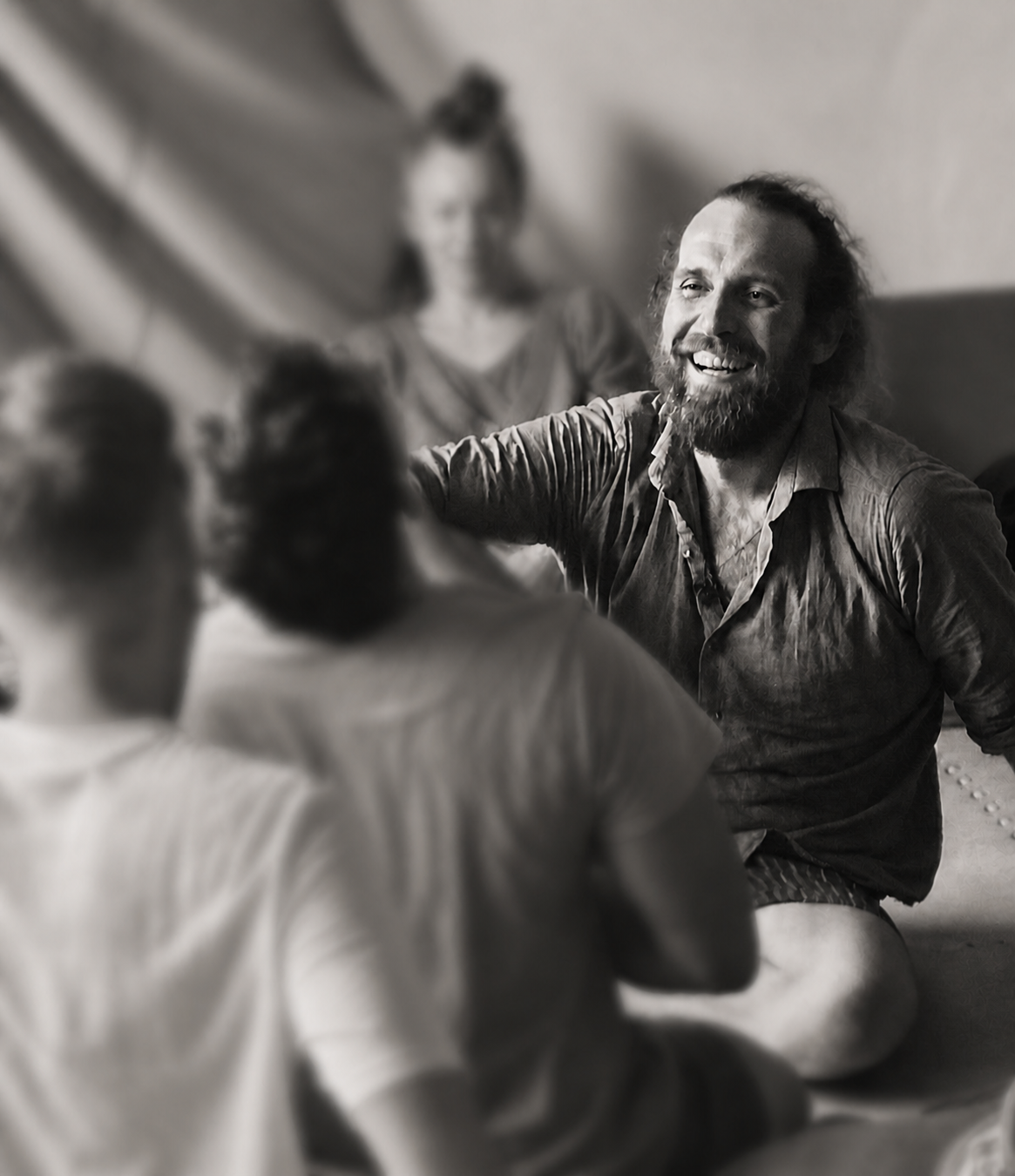
Ruben brings somatic, emotional and relational attention to this work. His role is to facilitate a safer and more honest process, not to decide the future of your relationship.
Suitability and scope
This work is complementary and does not replace medical, psychological, psychiatric, legal or emergency care. It cannot guarantee that a relationship will continue: greater honesty may support repair, or it may support a clearer decision. Where active abuse or immediate danger is present, contact an appropriate local specialist or emergency service.
Held by Ruben
Ruben works with the body, emotional honesty and the patterns that emerge between people. He brings warmth without avoiding difficulty, and challenge without turning either partner into the problem.
Begin together
One person can make the first contact. Before the work begins, both partners will need to choose participation freely.